
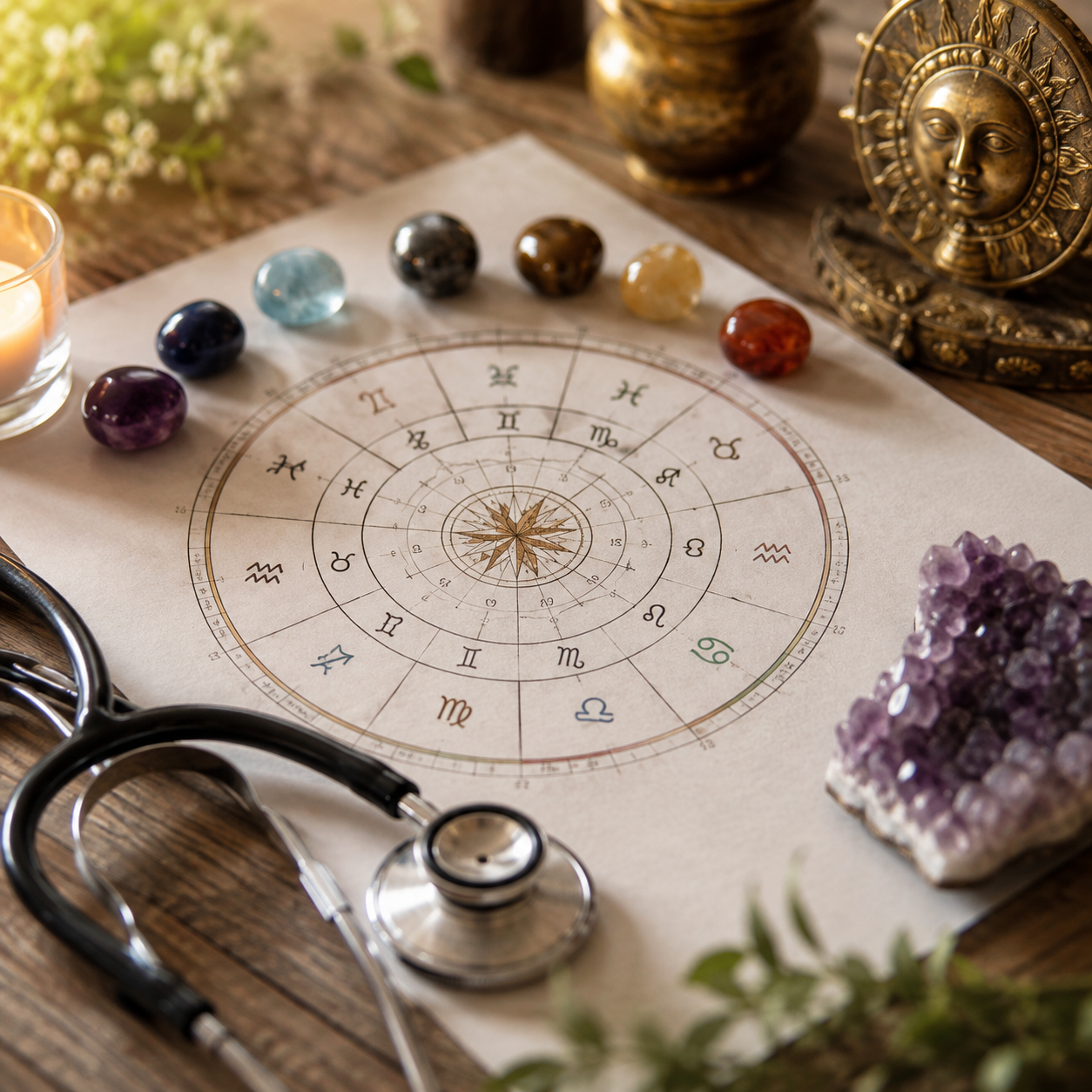
When people ask which planet affects your health in Vedic astrology, the answer is rarely as simple as naming one planet. Traditional Vedic astrology looks at the overall birth chart, including planets, houses, signs and planetary periods, before forming an interpretation.
In Vedic tradition, different planets are associated with different parts and functions of the human body. The Sun, for example, is traditionally connected with vitality, while the Moon is associated with the mind and emotional wellbeing. Other planets are linked with areas such as digestion, skin, reproductive health, bones and muscles.
However, these associations should be understood as traditional astrological interpretations, not medical diagnoses. If you have a health concern, qualified medical advice should always come first.
Interestingly, Ayurveda also takes a holistic approach to wellbeing, emphasising balance, prevention and healthy living. The Ministry of AYUSH describes Ayurveda as placing importance on maintaining positive health as well as addressing illness.
Understanding which planet affects your health in Vedic astrology can be a useful starting point for exploring traditional astrological ideas about wellbeing. However, the answer depends on the complete birth chart rather than one planetary position.
Which planet affects your health in Vedic astrology?
The traditional answer involves multiple planets rather than one universal health planet.
A Vedic astrology health analysis generally considers the Lagna (Ascendant), first house, sixth house, eighth house and twelfth house, along with the planets influencing them.
The condition and placement of planets can provide a traditional framework for understanding tendencies related to vitality and wellbeing.
Here is a simple overview.
1. Sun – Vitality, Strength and Overall Energy
When exploring which planet affects your health in Vedic astrology, the Sun is traditionally given particular importance because it represents vitality, physical strength and overall life energy.
In classical astrological interpretation, a well-placed Sun may be associated with confidence, vitality and resilience, while challenges involving the Sun may be interpreted as areas requiring greater attention.
Some traditional Vedic astrology texts associate the Sun with the bones and physical vitality.
Rather than assuming that a particular Sun placement means a person will develop a specific illness, an astrologer may use it as a prompt to encourage better lifestyle awareness.
2. Moon – Mind, Emotions and Emotional Balance
The Moon has an important place in Vedic astrology because it represents the mind, emotions and mental sensitivity.
Your Moon placement is therefore traditionally examined when discussing emotional balance, stress patterns, sleep-related tendencies and how a person responds to their environment.
This can be particularly relevant today because work pressure, social expectations and constant digital stimulation can affect how people experience stress.
Astrology can encourage self-awareness, but persistent anxiety, depression or sleep problems should be discussed with an appropriate healthcare professional.
This is one reason why people researching which planet affects your health in Vedic astrology should also consider the Moon, rather than focusing only on physical health indicators.
3. Mars – Physical Energy and Recovery
Mars represents action, physical energy, courage and drive.
In traditional health astrology, Mars is associated with physical strength and the body’s ability to respond actively to challenges. It is also considered when examining tendencies related to heat, inflammation or injuries.
This does not mean that a particular Mars placement predicts an accident or medical condition. A responsible interpretation focuses on awareness rather than fear.
4. Mercury – Nervous System, Skin and Coordination
Mercury represents communication, intelligence, learning and coordination.
Traditional Vedic astrology also associates Mercury with the skin and nervous-system-related functions.
From a practical perspective, Mercury can be interpreted in connection with mental activity, concentration and the way a person manages information.
For someone constantly working on computers or phones, this can become an interesting opportunity to reflect on screen habits, rest and work-life balance.
5. Jupiter – Growth, Nourishment and Metabolism
Jupiter is traditionally associated with expansion, nourishment, wisdom and growth.
In health-related astrology, Jupiter is often considered when examining tendencies connected with nourishment, weight and the body’s ability to maintain balance.
Its symbolism can also be viewed more broadly: moderation matters even when something is generally beneficial.
For example, eating well is important, but excess can also create imbalance. This is where traditional wisdom can encourage a more mindful approach to everyday habits.
6. Venus – Reproductive Health and Vitality
Venus represents relationships, beauty, pleasure, fertility and reproductive vitality.
Traditional Vedic astrology associates Venus with reproductive tissues and related aspects of vitality.
A horoscope analysis may therefore consider Venus when discussing reproductive wellbeing, relationships and lifestyle balance.
Again, astrology should not be used to diagnose fertility or reproductive conditions. Medical concerns in this area require professional medical evaluation.
7. Saturn – Bones, Muscles and Long-Term Discipline
Saturn is traditionally associated with structure, endurance, ageing, limitations and long-term discipline.
Classical Vedic astrology sources also associate Saturn with muscles and the Sun with bones.
Saturn’s symbolism can provide an interesting reminder about the importance of consistency. Regular movement, adequate rest and responsible lifestyle choices generally matter more over many years than occasional bursts of effort.
Does one planet determine your health?
No.
This is one of the most important points to understand about health in Vedic astrology.
A professional astrologer should not look at one planet and immediately conclude that a person has a particular health problem.
A broader horoscope analysis may consider:
- Ascendant and its lord
- First house
- Sixth house
- Eighth house
- Twelfth house
- Strength and placement of planets
- Planetary aspects
- Current planetary periods
- Relevant transits
- Overall chart combinations
This is why personalised horoscope analysis is more meaningful than generic statements such as “your Saturn is weak, so you will have health problems.”
How can Vedic astrology encourage better health awareness?
The most useful way to approach astrology is as a tool for reflection and decision support, rather than a replacement for healthcare.
For example, a horoscope discussion may encourage someone to think about:
- Are you getting enough sleep?
- Are you managing stress properly?
- Are you maintaining a regular routine?
- Are you ignoring recurring symptoms?
- Are your work habits affecting your wellbeing?
- Do you need better balance between work and personal life?
These questions can make astrology more practical and relevant to modern Indian lifestyles.
Ayurveda similarly places considerable emphasis on maintaining balance, daily routines and preventive health practices.
Can Vedic astrology predict illness?
It is better to avoid treating astrology as a medical prediction system.
Traditional astrology contains health-related interpretations, but these should be approached carefully and responsibly. A horoscope cannot replace a medical examination, diagnostic test or treatment prescribed by a qualified healthcare professional.
For reliable health information and evidence-based healthcare guidance, readers can also explore resources from the World Health Organization and India’s Ministry of AYUSH.
The Ministry of AYUSH also maintains an AYUSH Research Portal containing research resources related to traditional systems of medicine.
Why a complete horoscope is more useful than looking at one planet
Imagine two people who both have a challenging Saturn placement.
Their complete birth charts may still be very different.
One person may have supportive planetary placements elsewhere in the horoscope, while another may have a completely different combination of houses, signs and planetary periods.
That is why Vedic astrology health analysis should be personalised.
A knowledgeable Vedic astrologer looks at the complete picture instead of creating fear around one planetary position.
This principle is similar to understanding your home as a whole rather than judging its environment from a single room. You may also find our article on 7 Powerful Ways Your Home Environment Can Influence Your Mind and Decisions useful when exploring the connection between environment, habits and wellbeing.
For readers interested in the relationship between Vastu and everyday life, our guide on 7 Powerful Benefits of Choosing an Astro Vastu Consultant in Panchkula can be naturally linked here.
You can also connect this topic with our article Can Changing Your Home Vastu Change Your Luck? 7 Positive Ways Vastu May Improve Your Life when discussing how surroundings and lifestyle can influence our sense of balance.
Ultimately, which planet affects your health in Vedic astrology is best understood through a complete horoscope analysis. Different planets may represent different aspects of physical and emotional wellbeing, and their influence has to be considered in the context of the entire birth chart.
Frequently Asked Questions
Which planet is mainly responsible for health in Vedic astrology?
The Sun is traditionally considered an important indicator of vitality and overall physical strength. However, health analysis in Vedic astrology does not depend on the Sun alone. The Ascendant, houses and several planets are considered together.
Which planet represents mental health in Vedic astrology?
The Moon is traditionally associated with the mind, emotions and emotional responses. Its placement is therefore often considered in discussions about emotional wellbeing.
Which planet represents bones in Vedic astrology?
Traditional Vedic astrology associates the Sun with bones. Saturn is also associated with structural and muscular aspects of the body in some classical interpretations.
Can astrology tell me whether I will get a disease?
Astrology should not be treated as a substitute for medical diagnosis. A responsible astrologer can discuss traditional astrological tendencies and encourage greater self-awareness, but medical concerns should be evaluated by qualified healthcare professionals.
Can my birth chart help me understand my health tendencies?
Traditional Vedic astrology considers the Ascendant, relevant houses, planetary placements, aspects and planetary periods when discussing health tendencies. A complete chart is more informative than looking at one planet in isolation.
Should I use astrology instead of seeing a doctor?
No. Astrology and medical care serve different purposes. If you have symptoms or a health concern, consult a qualified medical professional. Astrology can, at most, be used as a complementary tool for reflection and personal guidance.
Which planet affects your health in Vedic astrology the most?
There is no single planet that determines a person’s overall health. When asking which planet affects your health in Vedic astrology, a traditional analysis considers the Sun, Moon, Ascendant, relevant houses and other planetary influences together. This broader approach is more meaningful than judging health from one planet alone.
Final Thoughts
So, which planet affects your health in Vedic astrology? The most accurate answer is that health is represented by a combination of planetary influences and houses rather than a single planet.
The Sun is traditionally connected with vitality, the Moon with the mind, Mars with physical energy, Mercury with coordination and skin, Jupiter with nourishment and growth, Venus with reproductive vitality, and Saturn with structure and endurance.
The real value of Vedic astrology lies in understanding these traditional associations thoughtfully—not using them to create fear.
For a personalised horoscope reading, Pradeep Bhanot – The Cosmic Voice approaches Vedic astrology as a source of practical guidance, self-awareness and informed decision-making. A detailed consultation can help you understand your individual chart in context rather than relying on generic planetary interpretations.
If you are looking for a Vedic astrologer in Chandigarh, Panchkula or Haryana, connect with Pradeep Bhanot – The Cosmic Voice for professional astrology consultation based on traditional Vedic principles.