
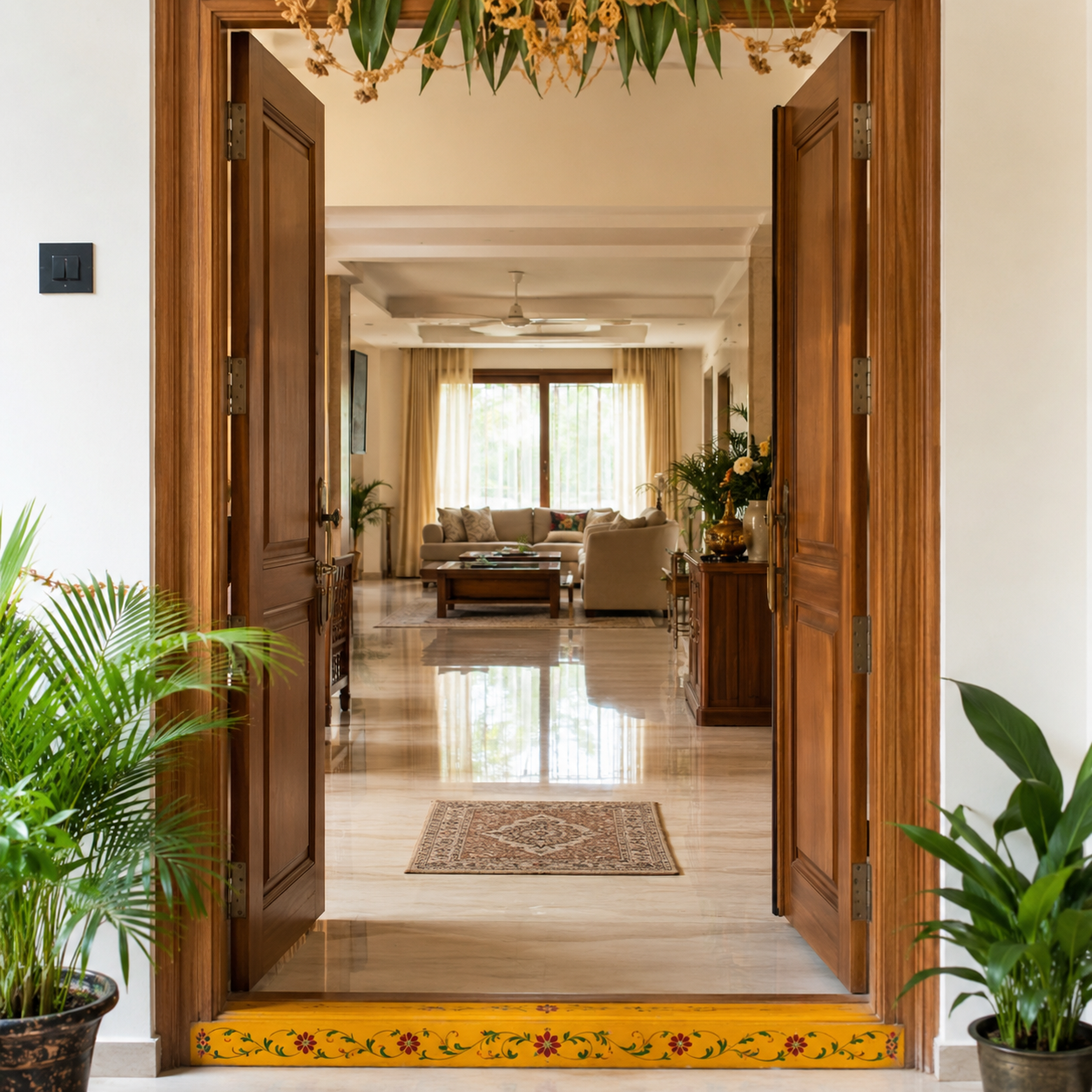
When people plan a new home or purchase a property, they often come across discussions about Vastu Shastra. Some view it as an ancient science of peaceful and happy living, while others consider it a matter of personal belief. The truth lies somewhere in between. Vastu is not about fear or superstition. Instead, it is a traditional system that focuses on creating balanced and comfortable living spaces.
In this article, we will explain the importance of Vastu for homes. Through this article, we will also explore Vastu’s potential benefits, and address some of the most common myths. According to Vastu expert Pradeep Bhanot, many homeowners are interested in Vastu because they want their homes to feel peaceful, organized, and supportive of family well-being. However, misconceptions about Vastu often create confusion and unnecessary anxiety.
What Is Vastu Shastra?
Vastu Shastra is a traditional Indian architectural system that provides guidelines for planning and designing living spaces. It considers factors such as direction, room placement, natural light, ventilation, and the overall flow of energy within a property.
The goal of Vastu for Homes is simple: to create an environment that supports comfort, balance, and harmony. While Vastu originated centuries ago, many of its principles align with modern architectural concepts such as proper ventilation, sunlight exposure, and efficient use of space.
Today, Vastu is applied not only to independent houses but also to apartments, villas, commercial properties, and office spaces.
Why Is Vastu Important for a Home?
A home is more than just a physical structure. It is the place where families spend most of their time, build relationships, and create memories. This is one reason why many people consider Vastu during construction, renovation, or property purchase.
- Better Utilization of Space
Vastu encourages thoughtful placement of rooms and functional areas. When spaces are planned properly, movement within the home becomes more convenient and comfortable.
- Improved Natural Light and Ventilation
Many Vastu recommendations emphasize the importance of sunlight and airflow. Homes with adequate natural light often feel more welcoming and pleasant.
- Enhanced Sense of Balance
A clutter-free and well-organized environment can contribute to a positive atmosphere. Vastu principles often encourage maintaining balance within different areas of the home.
- Family Harmony
While Vastu cannot solve personal or relationship challenges on its own, many homeowners believe that a well-planned living environment supports a more peaceful family life.
- Greater Peace of Mind
For many families, following Vastu provides confidence and reassurance when investing in a property. This emotional comfort can be an important benefit in itself.
Vastu for Homes – Common Myths Explained
One of the biggest challenges homeowners face is separating genuine Vastu for Homes guidance from popular myths. Pradeep Bhanot often emphasizes the importance of understanding Vastu correctly rather than relying on fear-based information.
Myth 1: Only East-Facing Homes Are Good
This is perhaps the most common Vastu myth. According to Vastu, the South-West direction (Nairutya) should be completely solid, heavy, and elevated to prevent stability and wealth from draining away. Water in the South-West is considered a major flaw. Yet, Mumbai’s economic heart opens right into the massive Arabian Sea to its West and South-West.
The reality is that several directions can be suitable depending on the property’s layout, design, and purpose. An east-facing home is not automatically superior, and a home facing another direction is not necessarily unfavorable.
A proper Vastu assessment considers multiple factors rather than focusing only on the main entrance direction.
Myth 2: A Home with Vastu Defects Will Bring Bad Luck
Many people worry unnecessarily after hearing that their property has a “Vastu defect.”
Pradeep Bhanot explains that Vastu should be viewed as a supportive system rather than a prediction of future events. Life outcomes are influenced by numerous factors including personal effort, decisions, circumstances, and opportunities.
Vastu is intended to help create a balanced environment, not to guarantee success or failure.
Myth 3: Vastu Corrections Always Require Major Renovation
Homeowners often fear that they will need expensive demolition work to improve Vastu compliance.
In reality, many recommendations involve simple adjustments related to room usage, furniture placement, organization, lighting, or other practical changes. Every property is different, which is why professional guidance is important before making structural modifications.
In fact, Pradeep Bhanot advocates Vastu rectification through Vedic Rituals. No breaking of walls, no modfications in structure required.
Myth 4: Vastu Is Relevant Only During Construction
While incorporating Vastu during the planning stage can be beneficial, existing homes can also be evaluated.
Many families consult Vastu experts after moving into a property. Depending on the situation, practical recommendations may still be possible without rebuilding the home.
Myth 5: Vastu and Feng Shui Are Exactly the Same
Although both systems focus on creating harmonious spaces, they have different origins and principles.
Vastu Shastra developed in India, while Feng Shui originated in China. The methods, terminology, and approaches differ significantly. Understanding this distinction helps homeowners avoid confusion when researching property-related guidance.
A Recent Example: Rajasthan Assembly and the Debate Around Vastu
The discussion around Vastu is not limited to homes. In 2025, Rajasthan’s Legislative Assembly made national headlines after several Vastu-related changes were implemented in the building.
Interestingly, for the first time in nearly 25 years, all 200 elected MLAs were present in the Assembly at the same time, leading many people to question whether the changes had helped remove a long-discussed “Vastu dosh” associated with the building.
According to Vastu expert Pradeep Bhanot, such examples should be viewed with balance and practicality. Vastu for Homes is not about expecting instant miracles or attributing every outcome to a single factor. Instead, it focuses on creating spaces that are aligned, organized, and supportive of human activity. Whether for a home, office, or public institution, the purpose of Vastu is to improve harmony within the environment rather than make extraordinary promises.
Can Vastu Be Applied to Modern Homes?
Absolutely, Vastu for Homes may be applied to any home.
Modern apartments, urban homes, and contemporary villas often have design limitations that did not exist centuries ago. A practical Vastu approach considers these realities.
Experienced consultants focus on workable solutions that fit modern lifestyles rather than insisting on unrealistic changes. The objective is to create a comfortable and functional living environment while respecting the property’s existing structure.
Expert Insights from Pradeep Bhanot
According to Pradeep Bhanot, one of the biggest mistakes people make is approaching Vastu from a place of fear.
Many homeowners spend hours watching videos or reading conflicting opinions online. This often leads to confusion and unnecessary stress. Instead, it is important to understand that Vastu is intended to guide thoughtful planning and balanced living.
A professional assessment looks at the complete picture of a property rather than focusing on isolated rules. Every home is unique, and recommendations should be tailored accordingly.
Pradeep Bhanot advises homeowners to prioritize practicality, comfort, cleanliness, natural light, and proper space utilization alongside Vastu considerations.
Frequently Asked Questions About Home Vastu
Does Vastu really work?
People have different perspectives on Vastu. Many homeowners value it as a traditional system that promotes balance, organization, and thoughtful planning.
Is Vastu important when buying a new house?
Many buyers consider Vastu as one of several factors while evaluating a property. Location, budget, construction quality, and lifestyle needs should also be considered.
Can apartments follow Vastu principles?
Yes. Vastu can be applied to apartments and flats, although recommendations may vary based on the building layout and available space.
Should I avoid buying a home that is not fully Vastu compliant?
Not necessarily. A property’s suitability depends on multiple factors. Professional guidance can help you understand the practical implications of specific concerns.
Final Thoughts
Vastu Shastra continues to remain relevant because it encourages people to think carefully about how their living spaces are planned and used. While myths and misinformation often create confusion, a balanced understanding of Vastu for Homes can help homeowners make informed decisions.
Rather than viewing Vastu as a source of fear, it should be approached as a framework for creating comfortable, organized, and harmonious homes. With expert guidance from professionals like Pradeep Bhanot, homeowners can gain clarity and practical insights tailored to their unique property and lifestyle needs.