
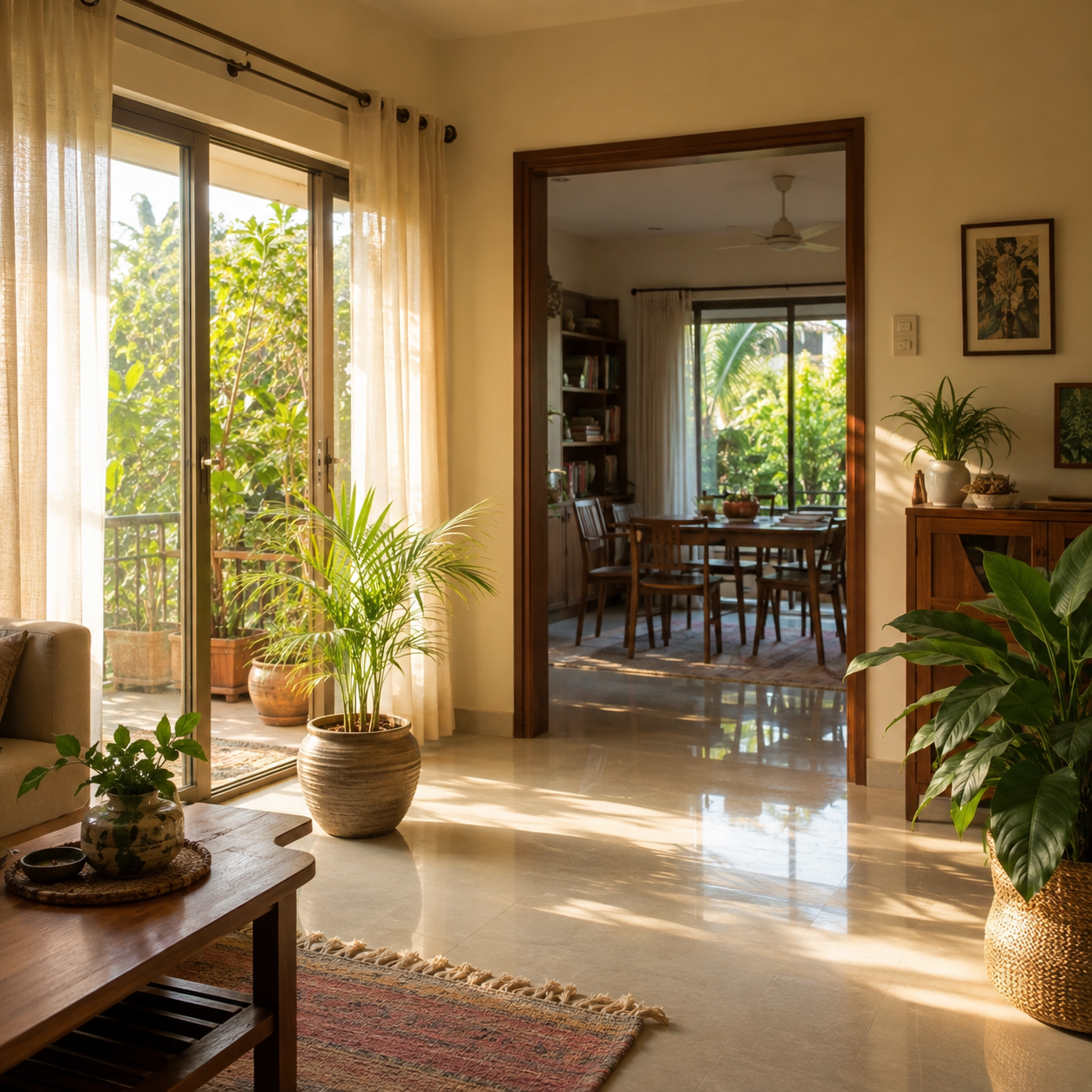
Have you ever noticed that you feel calm and focused in one room but restless or distracted in another? The reason may not always be your mood. Your home environment can influence how comfortable you feel, how easily you concentrate and even how you approach everyday decisions.
Your home is more than walls, furniture and appliances. It is where you begin and end most of your days. Natural light, ventilation, noise, clutter, privacy, temperature and the way different spaces are arranged can all shape your everyday experience.
The World Health Organization recognizes housing as an important factor in health and well-being. Its WHO Housing and Health Guidelines examine issues including crowding, indoor temperatures, housing safety, air quality and neighbourhood noise.
This does not mean your home controls your destiny. Rather, it suggests something much more practical: a thoughtful home environment can create better conditions for a calmer mind, healthier habits and more considered decision-making.
What Is the Connection Between Your Home Environment and Your Mind?
Your brain constantly responds to its surroundings. When you enter a room, you notice light, temperature, sounds, smells, people, objects and available space—often without consciously thinking about them.
A home that feels safe, comfortable and organized can make it easier to relax and concentrate. On the other hand, persistent noise, crowding, poor ventilation, excessive clutter or uncomfortable temperatures may add to everyday stress.
The World Health Organization recognizes housing as an important factor in health and well-being and identifies issues such as crowding, indoor temperatures, noise, air quality and housing conditions as relevant to health outcomes.
The WHO Housing and Health Guidelines explain how factors such as inadequate living space, indoor temperature, housing safety, air quality and noise can affect health and well-being.
So, when we ask why your home environment can influence your mind and decisions, the answer is not simply spiritual. There are practical and psychological factors involved as well.
1. A Calm Home Environment Can Support Mental Clarity
Imagine trying to make an important career decision while sitting in a room filled with unfinished work, scattered objects, constant television noise and frequent interruptions.
Now imagine making the same decision in a clean, comfortable and relatively quiet space.
Your circumstances have not changed, but your immediate surroundings have.
A calm home environment can provide your mind with fewer distractions. This can be especially valuable when you need to study, work from home, plan finances or have an important conversation with your family.
This is one reason simple habits such as keeping frequently used areas organized and creating a dedicated workspace can make daily life feel easier.
2. Light and Ventilation Can Affect How You Feel
Natural light and fresh air are often taken for granted, particularly in busy urban homes.
Yet environmental research has associated factors such as light, air quality, temperature and noise with psychological well-being and cognitive functioning.
Whenever practical, allow natural daylight into living and working areas. Keep windows and ventilation points functional and avoid unnecessarily blocking them with furniture or heavy objects.
These are simple improvements. They do not require expensive renovation.
In Indian homes, where summers can be particularly demanding, maintaining comfortable indoor temperatures and adequate ventilation can also make a noticeable difference to everyday comfort.
3. Clutter Can Keep the Mind Mentally Busy
A cluttered home does not automatically mean a person has a cluttered mind. However, constantly seeing unfinished tasks and excessive belongings can contribute to a sense of disorder.
Think about a dining table covered with bills, school books, parcels and miscellaneous objects. Every time you see it, your brain receives another visual reminder of things that need attention.
Instead of trying to reorganize the entire house in one day, start with one area.
Clear your study table.
Organize your bedroom.
Remove things you no longer use.
Create a peaceful corner for reading, meditation or quiet reflection.
Small changes can make your home environment feel more manageable.
4. Your Home Can Influence Your Daily Habits
The arrangement of your home can quietly encourage certain behaviours.
For example, if your study area is comfortable and free from unnecessary distractions, you may find it easier to spend time there. If your bedroom is primarily associated with rest rather than work, it may feel more relaxing at the end of the day.
This is particularly relevant today because many Indians work, study and attend meetings from home.
The boundary between professional and personal life has become less clear. Creating different functional zones—even within a small home—can help establish psychological boundaries.
A dedicated work corner does not need to be an expensive home office. Even a clean table with a comfortable chair and limited distractions can serve the purpose.
5. Nature and Greenery Can Create a More Positive Home Environment
Plants, natural light and views of greenery can make a living space feel more pleasant.
Research examining natural environments has found evidence that exposure to nature can support relaxation, reduce stress and potentially assist cognitive functioning.
For an Indian household, this can be as simple as maintaining a few suitable indoor plants, keeping a balcony usable, or spending a few quiet minutes near natural light in the morning.
The objective is not to turn your house into a garden.
It is to create small opportunities for your mind to experience natural elements.
Research published in Science of the Total Environment has also reviewed evidence on natural environments and mental health, including the relationship between green spaces, well-being and stress.
6. Your Home Environment Can Affect Family Communication
A home is also a social environment.
A family may live in a beautiful house but still experience tension if there is no comfortable space for conversation or privacy.
Similarly, a modest home can feel peaceful when family members have mutual respect, reasonable privacy and a sense of belonging.
Noise, crowding and lack of personal space can become sources of stress. WHO notes that insufficient housing quality and factors such as crowding, pollution, noise and inadequate lighting can contribute to mental-health challenges.
This is particularly important in Indian families where multiple generations may live together.
Sometimes improving the home environment is not about changing the structure. It may simply involve creating better routines, respecting personal space and keeping certain areas peaceful.
7. Vastu Shastra Looks at the Relationship Between Space and Life
This is where traditional Indian wisdom offers another perspective.
Vastu Shastra has traditionally focused on the relationship between built spaces, directions, placement, proportion and the way people use their surroundings.
A responsible approach to Vastu does not mean believing that one direction or object will automatically solve every problem in life.
Instead, Vastu can be approached as a traditional framework for thinking about balance, functionality and harmony within a space.
For example, a Vastu consultation may look at the layout and usage of different areas of a home and identify practical adjustments that may improve how the space is experienced.
Many Vastu suggestions can also involve non-structural changes rather than demolition or expensive reconstruction.
This practical approach is important for modern Indian homeowners.
If you are interested in the broader role of traditional guidance in life decisions, you may also find our article Why Indians Trust Astrology: 9 Powerful Reasons Behind Its Timeless Relevance useful. It explains how many Indians use Vedic knowledge as a source of guidance rather than as a replacement for personal effort and practical decision-making.
Can a Home Environment Really Change Your Decisions?
It can influence the conditions in which decisions are made, but it would be an exaggeration to say that your house determines your decisions.
Your decisions are shaped by many factors—your experience, personality, relationships, finances, knowledge, emotions and circumstances.
However, your surroundings can influence stress, attention, comfort and mental clarity.
A recent Indian study found a positive association between better housing quality and executive-function skills, which are important for attention, working memory and decision-making.
That makes the subject worth taking seriously without turning it into a promise of guaranteed results.
An Indian study published in the International Journal of Environmental Research and Public Health also examined the relationship between housing quality, housing stress and executive-function skills, including attention and decision-making. You can read the Indian research on housing quality and cognitive health for more detail.
5 Simple Ways to Improve Your Home Environment
You do not necessarily need a major renovation to make your home feel better.
Try these practical steps:
- Declutter one frequently used area rather than attempting the whole house at once.
- Improve natural light and ventilation wherever possible.
- Create a dedicated space for focused work or study.
- Keep your bedroom primarily associated with rest and relaxation.
- Add natural elements, such as suitable plants or access to daylight and fresh air.
If you are considering Vastu, begin with observation rather than fear. Look at how your family actually uses each space before making changes.
How Can Vastu and Practical Home Design Work Together?
Traditional Vastu guidance and modern understanding of healthy living spaces do not necessarily have to be treated as opposing ideas.
Both can encourage people to pay greater attention to their surroundings.
Modern research examines factors such as light, air, noise, temperature, crowding and access to green spaces. Indian Vastu traditions provide a cultural framework for thinking about spatial balance and the use of different areas of a home.
A thoughtful Vastu consultation should therefore focus on understanding the individual home, its occupants and their practical needs—not on creating fear or making unrealistic promises.
For homeowners in Chandigarh, Panchkula and across Haryana, this can be particularly useful when buying a property, designing a new home or trying to improve an existing space without major structural changes.
Frequently Asked Questions
Can my home environment affect my mood?
Yes. Factors such as lighting, noise, temperature, air quality, crowding, privacy and the overall condition of a home can influence comfort and psychological well-being.
Can a positive home environment improve decision-making?
A supportive environment may help by reducing distractions and stress and supporting attention and mental clarity. However, your surroundings are only one factor among many that influence decisions.
Does clutter affect mental peace?
Excessive clutter can contribute to feelings of disorder or mental overload for some people. Keeping important areas organized can make the space easier to use and more comfortable.
Can Vastu improve the home environment?
Vastu Shastra offers a traditional Indian framework for considering the relationship between people and their spaces. It can be used alongside practical considerations such as ventilation, lighting, cleanliness, comfort and functionality.
Do Vastu changes always require demolition?
No. Many Vastu recommendations can involve practical, non-structural adjustments. A good consultation should consider the existing structure before suggesting major changes.
Should Vastu replace practical or professional advice?
No. Vastu should be treated as traditional guidance. Decisions involving medical, psychological, structural, financial or legal matters should be made with the appropriate qualified professionals.
Final Thoughts: Your Home Is Part of Your Everyday Mental Space
Your home does not determine your future, but it can influence the conditions in which you live, think and make decisions every day.
A better home environment does not necessarily mean an expensive interior, a larger property or major construction. Sometimes it begins with something much simpler: better light, fresh air, less clutter, a quiet corner, functional organization and a greater awareness of how your family actually uses the space.
Traditional Vastu Shastra can offer another perspective on creating harmony within a home, provided it is approached responsibly and without fear-based claims.
If you are considering a home purchase, planning a new property or simply wondering whether your existing space could be made more balanced and comfortable, personalized guidance can help you look at the home from a broader perspective.
Pradeep Bhanot’s The Cosmic Voice offers Vedic Astrology, Vastu consultation, Muhurat guidance and spiritual guidance for individuals and families in Chandigarh, Panchkula, Haryana and across India. The approach combines traditional Vedic knowledge with practical guidance for modern life.
For personalized Vastu guidance based on your home’s layout and your specific requirements, connect with Pradeep Bhanot’s The Cosmic Voice for a professional consultation.